
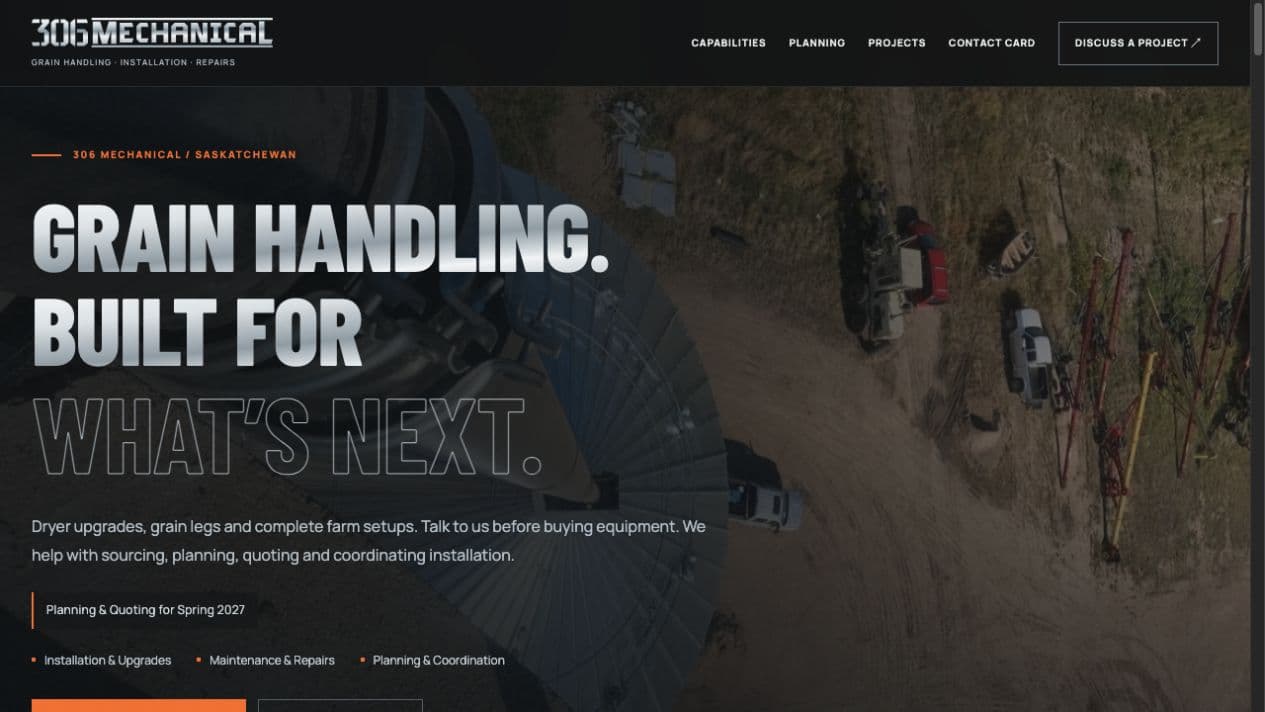
The problem with a Facebook page as your whole business
A grain-handling crew does serious work — planning, installation, repairs on equipment that farms depend on at the worst possible time of year. But online, the business was a Facebook page and word of mouth. When a new customer wanted to check the work before calling, there was almost nothing to check.
That's the gap a real website fills. Not decoration — proof.
What went into this build
306 Mechanical's site (306mechanical.app) was built around how its customers actually decide:
- Real project photography — actual installations and equipment, prepared properly for the web, not stock photos of somebody else's farm.
- Services in plain language — what the crew does, stated the way a customer would search for it.
- A project library — the work, shown, so the site sells while nobody's answering the phone.
- A digital contact card — one link a customer can save to their phone, so the number is there at seeding and harvest when it matters.
Built by the person who does the work
Buxi Digital is run by Richard Bussiere — the same person behind 306 Mechanical. The websites come from the trades side of the fence: built in the off season, priced flat, and checked on a phone first, because that's where your customers will look at them.
A useful next step
If your business is running on a Facebook page and a prayer, see what a Buxi website includes or start a website project.
Further reading
Google Search image guidance explains descriptive filenames, alt text, and image discoverability.